Podcasts & press
For hosts, producers and editors.
Everything below can be used without asking. For a conversation, write to istvan@humania.io.
Podcasts & press
Everything below can be used without asking. For a conversation, write to istvan@humania.io.
István Joós mapped the three mountains of adult life from his own collapse and a thousand people's turning points, and argues that most advice is written for a mountain you're not on.
István Joós is a Hungarian author and guide. A successful internet entrepreneur in his twenties, he lost everything to addiction, and spent the next 20+ years listening to more than a thousand people at the turning points of their lives. From that he drew the Three Mountains map — success, happiness, meaning — and its central claim: you cannot skip the second mountain, and you cannot live there.
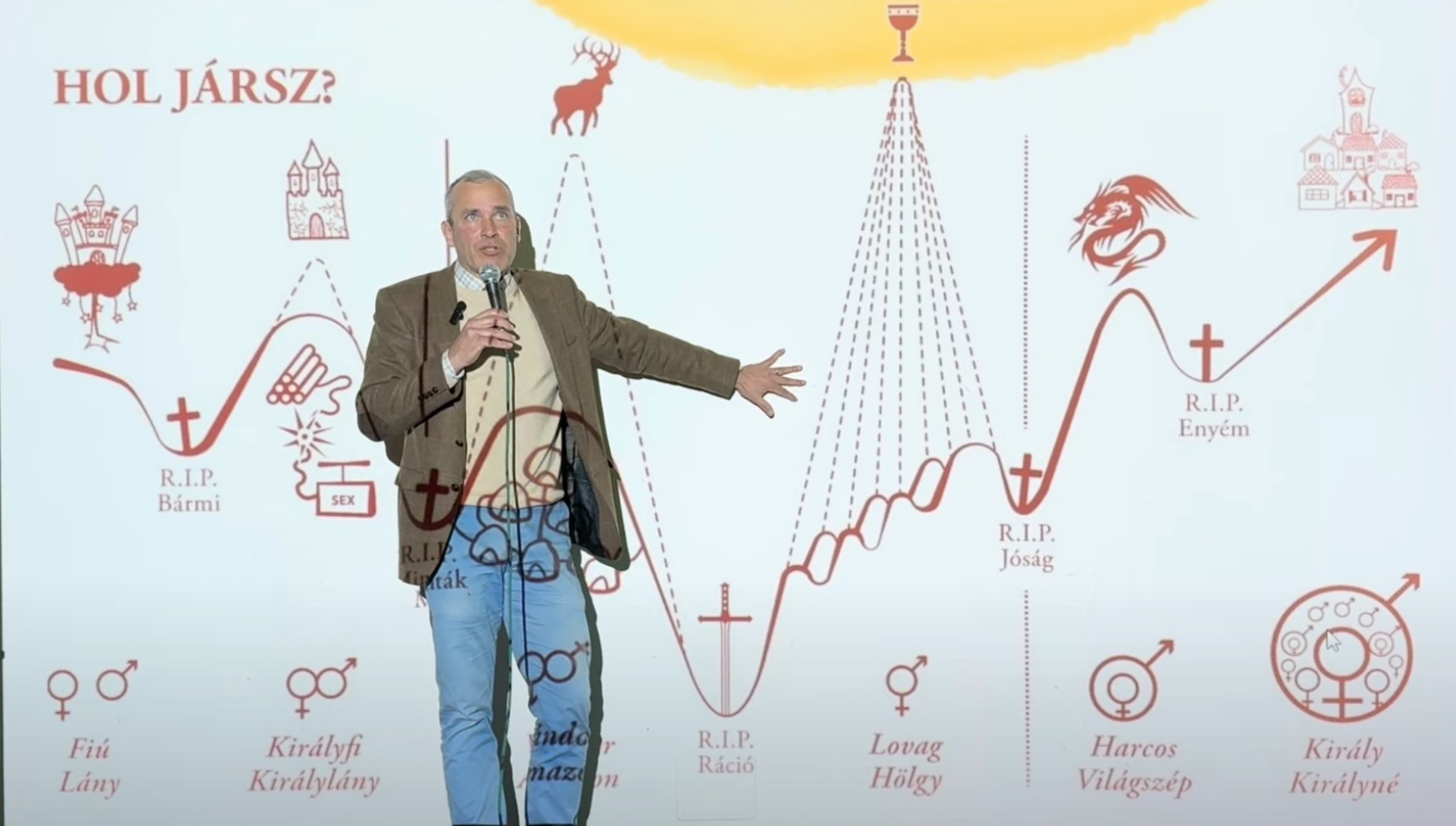
István Joós is a Hungarian author, guide and founder based in Budapest. In his twenties he built a successful internet business and, by his own account, became deeply self-centered; the business and the self both collapsed, and addictions buried the life he had built. He began writing about the collapse as self-therapy, and readers began to seek him out. Over the following 20+ years, more than a thousand people walked him through their own turning points, and the same pattern kept appearing. In 2015 he drew it: three mountains — Success, Happiness, Meaning — in a fixed order, with a valley of prison and a valley of loneliness between them.
His central claim cuts across the current argument in self-development. Against the responsibility camp, he holds that the search for happiness is a necessary mountain, not decadence to be skipped; against the therapeutic camp, that it is the middle mountain, not the last. He is known in Hungary for three books, more than fifty courses and three YouTube channels, and he is the founder of Humania, an app and trust network built on the map. He has spoken at TEDx and Forbes events, has lived in the United States, and works in Hungarian and English. He describes himself as a cartographer, not a coach: he does not tell people what to do; he tells them where they are.
01 · Wrong-mountain advice. Why the same advice transforms one person and wastes another's year, and how to tell which advice is for you.
02 · The skipped mountain. Why the young men returning to duty and tradition are half right; how a sincere return can become a false summit when it avoids the descent into the self; and why the fear is human but what they call it is their responsibility.
03 · When therapy stops working. Self-knowledge as a stage, not a destination, and why the way out of the second valley isn't more insight.
04 · How to know you've actually crossed. A transition is proven by what happened afterwards, not by what you believe. The evidence test I use.
05 · Success, collapse, and what a thousand people taught me. The map's origin, and what it's like to draw the terrain you nearly died on.
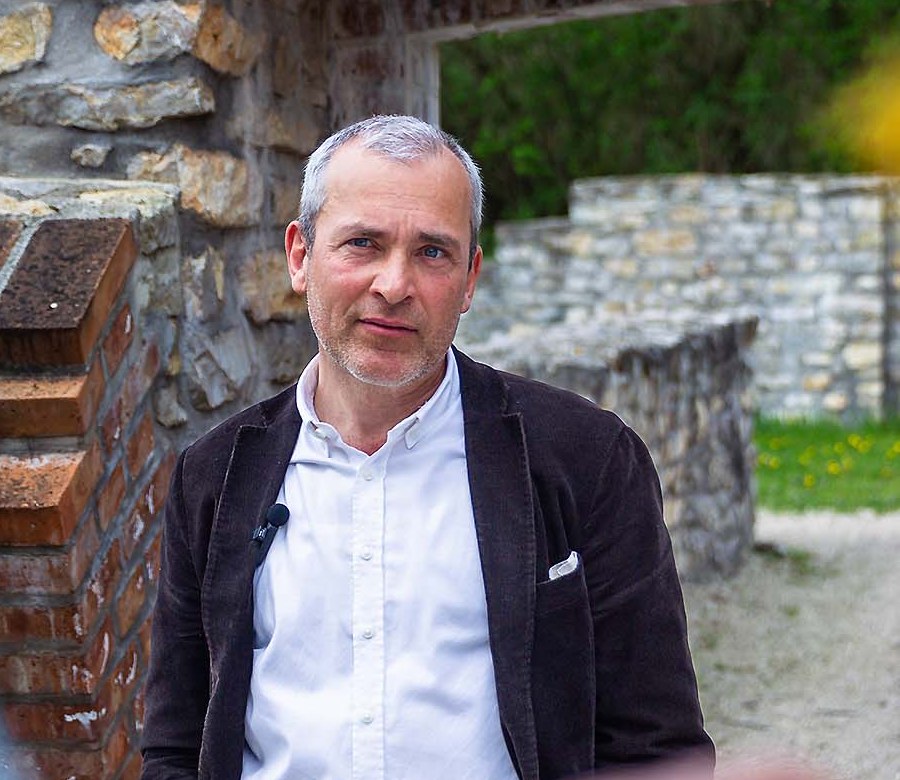
Five photographs, free to use for editorial coverage. Click to download the full-size file.



For podcast, interview, speaking or editorial requests, write with a short note about the format, audience and timing. I'm in Central European Time and record at US-friendly hours.
istvan@humania.io