Imperfection creates connection.
Dropping the pose gives other people a real person to meet.
About
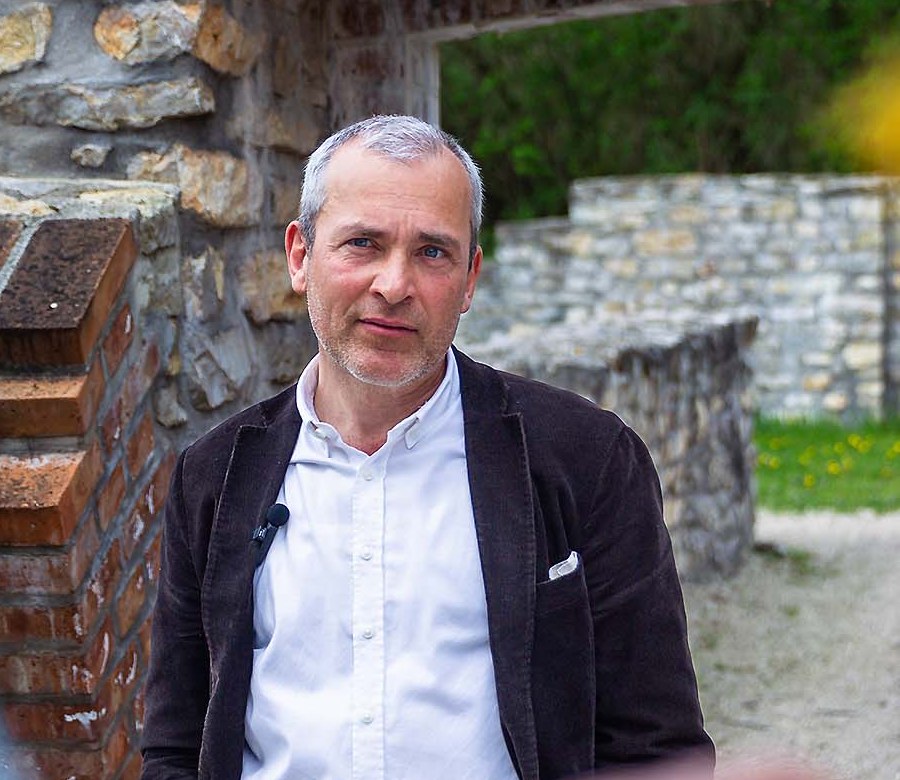
Author, guide, and the person who drew the Three Mountains map. Hungarian. Based in Budapest. Not a therapist, a professor or a pastor.
In my twenties I became successful as an internet entrepreneur, and I was deeply self-centered and deeply arrogant. Then I collapsed. Addictions buried the life I had built.
I began writing about my wounds as a form of self-therapy. I had no plan. I told the truth about what had happened to me, and people began to connect. That writing was the first honest thing I had ever made, and it opened a life I hadn't planned: not as an advisor, but as someone people came to when the old way stopped working.
What ended the Second Mountain for me was not another crisis, but the arrival of something larger than myself — a cause, a project, an idea, a vision that felt more important than any of my desires, more important than anything I had encountered before. I knew I could give the rest of my life to it — even more: I knew I had to. So I did.
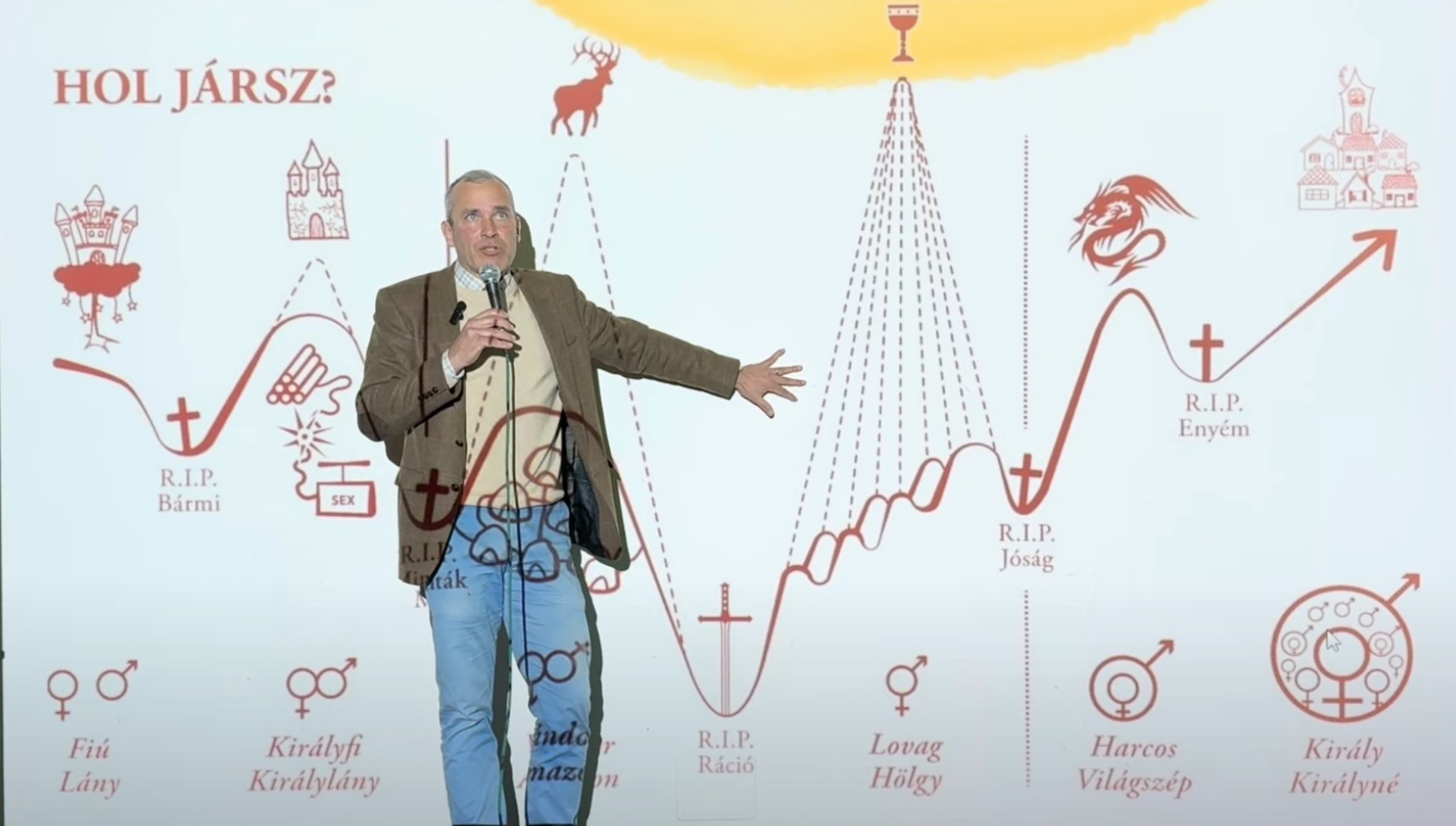
Over 20+ years, more than a thousand people have walked me through their turning points, some over a few weeks, many over years. The same shape kept appearing: three mountains, in one order, with the same two valleys between them. In 2015 I drew it. I've been correcting it against real lives ever since.
I live in Budapest with my family. I've lived in the United States, and I work in Hungarian and English. I'm a cartographer, not a coach: I don't tell you what to do. I tell you where you are.
Dropping the pose gives other people a real person to meet.
A crisis is often the call of a future self whose life is ready to begin.
Other people's lived truth helps us see past beliefs that have become too small.
From listening, mostly. From my own collapse and what came after. And from three older sources I keep returning to: Jung's account of the second half of life; the fairy tales and myths that describe the same journey in every culture; and the story of the prodigal son, which turns out to contain the whole map, including the brother who never left.
I'm not a psychologist, and the map isn't a validated instrument. It's accurate about the order, and about the middle.
I'm a Christian. After a great deal of searching, doubt and my own dead ends, the example of Jesus is what works for me. I don't teach a religious method, and the map doesn't require any belief. I'm as interested in the loss of faith as in faith, because in my experience losing an inherited God is often part of the path, not a departure from it. In Hungarian I run a channel about exactly this: belief, doubt, church wounds, and what actually works in a life. In English, it's a conversation I'm glad to have when you're ready to have it.
The map began, twenty years ago, as a map of the man's journey and the woman's journey: how what we want from ourselves and from each other changes at each mountain. I've simplified it since, because the three mountains are universal and I wanted people to meet the terrain before the more confrontational layer. That layer still exists, and it's one of the strongest parts of my work; it's also the part I live, not only teach. In English it's a later chapter. One thing from it I'll say now: neither your sex nor your relationship status tells you where you are on the path.
The English work is the tip of something. In Hungarian, over two decades, there are:

None of this is offered in English yet. I'd rather tell you that than pretend otherwise.
That is what Humania is for: an app and trust network built on the map. Inside it, Sherpa is being built to help people recognize where they are, choose a timely next step and follow through. Over time, the network is meant to help people reach others whose lived experience matters to their situation. The company behind it is Humania Inc., which I founded and run. This is still my personal site, not Humania's product website — but Humania is where the map is being put to work at scale.
About HumaniaIf you want more than the map — a placement, a course, a group, or private work — everything that exists is on one page, with what it costs and who it's for. If you lead something and have had enough coaching, there's a page for you too.
István is pronounced [ISHT-vahn]; Joós is pronounced [YOH-oash]. Steve is fine.